A Thought Question: Animal Hair Toothbrushes And Silk Dental Floss??
I’m going to publish an article that is unconventional, however I believe the subject is thought provoking. My goal is to discuss a more existential topic addressing some of our daily oral hygiene practices, side effects with regards to pollution, and alternatives we can endorse.
Environmental battles determining where plastics should remain in society continue and grow. The reality that plastic can take anywhere from 1,000 years, to 10,000 years, to beyond in order to break down is becoming more apparent. Some agencies now claim tire plastics will last forever. Ultimately, plastics break down into macroplastics, which break down into microplastics, continuing into ever smaller pieces until we cannot see them or filter them with our water systems. As a result, at a certain small size, we cannot eliminate microplastics from our food or water supply, etcetera. Microplastics are now known to be in our bodies, even found in our brains. While mostly inert and low in number, the amount of plastic pollution going into our bodies will only increase as more plastic waste breaks down, and plastics do have inflammatory effects in our body, they oxidize, damage, and kill our cells, and they also cause hormone disruption. Plastic ingestion will certainly reach a point where consumption becomes a problem for our kidneys and other organ systems.
Dentistry and its appliances for decades have been a source of plastic pollution. Interestingly, many dental products are optional, appealing to convenience. Lots of single use, or limited use, throw-away plastics in some form. For the last 70 years or so, most toothbrushes have been heavily made of plastic. Interestingly, every time you brush your teeth, microscopic portions of the plastic bristles break down and either go into your body, or get washed down the drain, into the water supply. It is the same principle from physics which describes how any friction causes microscopic abrasion. Think of paint on a door that has been rubbed off by continuing contact. Think of the fact that a small portion of a plastic bottle will be consumed when you drink the liquid, because the liquid has sloshed around inside the bottle to various extents. Such small plastic particles are too tiny to filter out with even the most advanced water processing techniques, and the microplastic particles will migrate into the human food chain, to be consumed and further broken down by all of us. It is disturbing to consider the ramifications on a large scale with every person brushing their teeth, twice a day, over a lifetime, with plastic toothbrushes and plastic bristles.
We are learning the consequences of plastic convenience is less worthwhile. Going back to basics, wasteful plastics don’t have to show up often in dentistry or daily life. In fact, if we travel to a near plastic-free time about two generations ago, we find the original plastic-free toothbrushes and dental floss of the vintage days, with some stunning advantages.
What existed before plastic toothbrushes and their bristles were quite similar brushes and dental floss products, involving wooden handle toothbrushes with boar or horse hair bristles, and silk dental floss. Compare them next to modern plastic varieties and the similarities are profound, without the drawbacks. Is newer truly better? Here are some considerations.
While plastic bristles are soft and splay easily, boar or horse hair toothbrushes remain soft and fatigue very little over time. I want to elaborate on this. The natural toothbrush bristles don’t fatigue much over time.
Typical dental advice is to purchase “soft bristled” toothbrushes so you don’t abrade your teeth. Soft plastic bristled toothbrushes fatigue drastically faster than firm plastic bristles, and people may even buy the firm bristled brush because it slowly fatigues into a soft brush. Lots of wear, lots of microplastic generation, and tooth abrasion in the process. With the properties of natural animal hairs, boar or horse-haired toothbrushes simply don’t fatigue in the way plastic does. Horse hair bristles are the naturally soft option, while not splaying much over time either. You can actually brush with this material for months and you will wear the bristles away before the bristles even splay. Boar hair is a much more firm bristle, and it resists splaying for months. You may simply want a new brush before it fatigues enough.
What more, if you are worried about the sanitary aspect, animal hair is prepared so well one typically can’t tell the bristles are from an animal. During processing they are cleaned, autoclaved, and sterilized. What more, being animal hairs, they are also naturally antimicrobial.
You may have heard the strength of silk is greater than steel by weight. Regarding dental floss, you may be surprised to learn that the profound strength of silk lends its advantages to dentistry in the form of silk dental floss! Silk floss not only exists and is strong and organic, it works just as effectively, if not better, than the standard plastic floss we are all accustomed to. It works better because silk can physically absorb, pull, and wick bacteria off teeth, as opposed to the slick properties of plastic floss which is more prone to smearing plaque around. The same unique property exists for animal-hair toothbrushes. The natural fibers will brush plaque off teeth without damaging the enamel, and actually hold the plaque on the fibers so you can wash it down the drain.
Boar and horse hair animal hair brushes perform longer, pull plaque off teeth very well, and leave no pollution as a side effect. Of additional benefit, the strength of silk dental floss allows it to be reused, rather than thrown away after each application. Wash the floss off under faucet water and it is clean again.
Boldly, companies are now remaking these original, organic hygiene products, and they are extremely effective keeping cavities off teeth - even better than current generation plastic toothbrushes, and I would argue in many circumstances, better than electric toothbrushes.
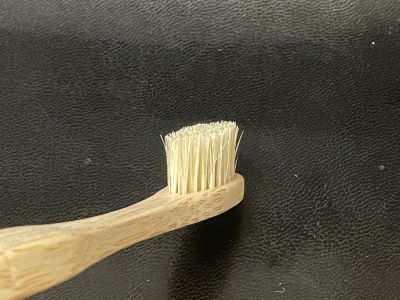
As a dentist, I purchased the latest animal bristled brushes and silk floss options from several brands, and tested them. The results are remarkable, and exceed my expectations. Observe here a brand-new horse hair (brown) bristled toothbrush, and boar hair (light tan) bristled toothbrush.
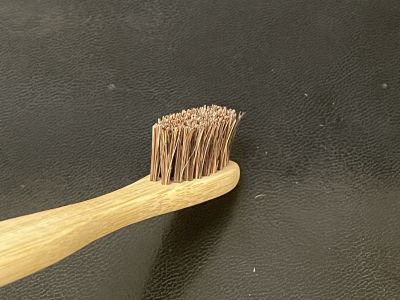
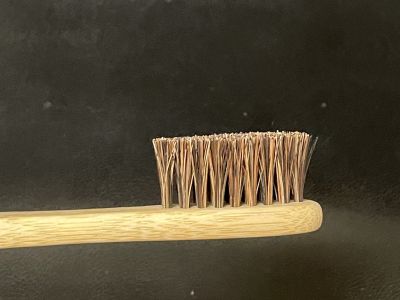
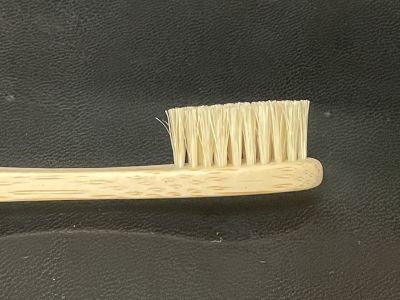
This is the horse hair brush after four months of daily use:
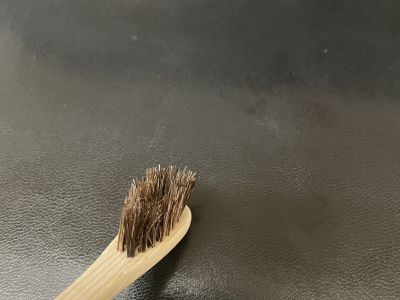
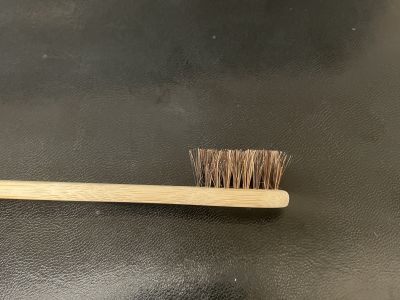
Note how the middle of the brush actually is worn away, and the sides remain tall. If you zoom in, you can actually see the crater in the middle of the brush head where the bristles are half the height of the outer bristles. This is not an exaggeration. The brush actually gets better over time because it reduces height in the areas of prominent contact, and the sides stay vertical and continue to press into the sides of the teeth, gaining an additional cleaning effect. Here is the boar hair toothbrush after six months of use:
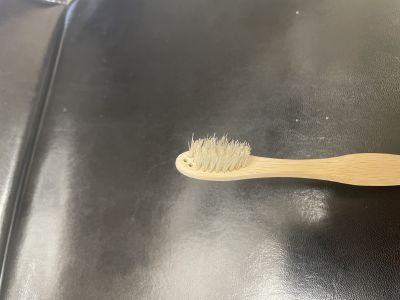
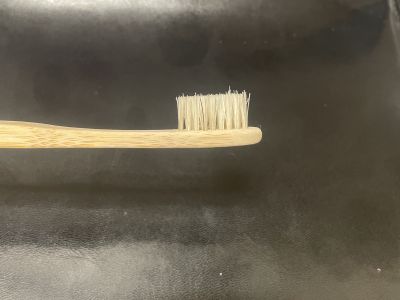
No fraying. No notceable bristle wear. Softening bristles over time. At 6 months use, it is as soft as a horse hair brush. In fact, you can see two wells had the staples holding the bristles come loose and fall out because the brush is lasting so long. No mold, the bristles appear as clean as the day the brush began use.
Here is a common distraction, the marketed next best thing - a “bamboo” brush, however not an animal-hair brush. This type of product is commonly advertised on the internet, looks organic, however has one exception: the bristles are still plastic.
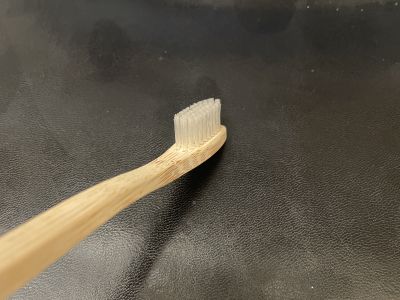
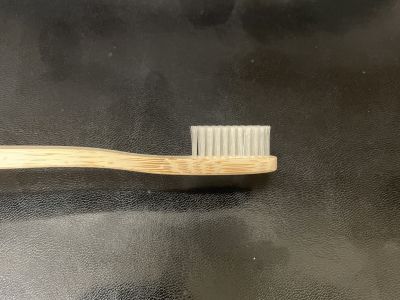
After three months in use, here is how the medium-firm plastic bristles in the bamboo brush appear:
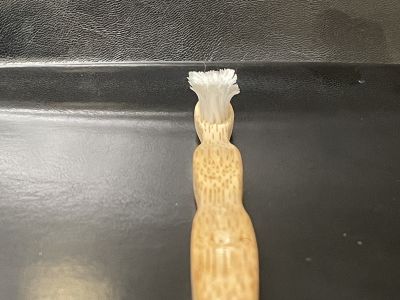
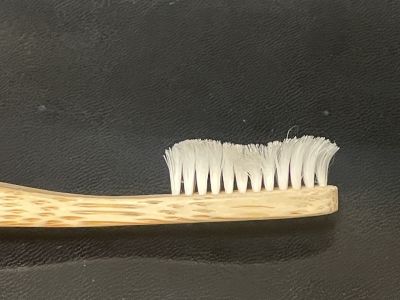
That brush has medium-firm plastic bristles. Soft or extra soft bristles would splay and degrade even faster.
Considering organic product’s role with children, organic brushes excel not only because they remove plaque well, but also because kids tend to chew the brushes, especially when they are young. Here is a the toothbrush of a 3-year-old after two months:
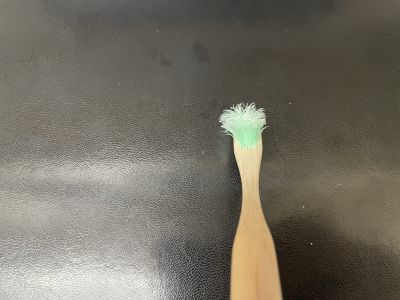
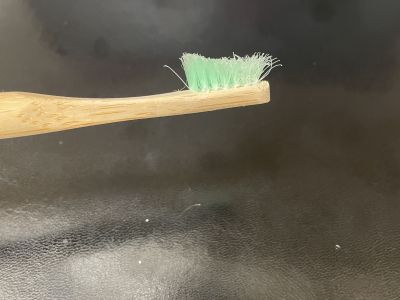
So you want something robust. No bristle splay makes a big difference when you otherwise would be buying a new brush every few weeks, with your child ingesting microplastics in the process. I would advise a horse hair toothbrush for children, as gums can be more sensitive, and soft bristles really help when they bust their lip and you still have to try brushing.
If you favor this philosophy, the next part to consider is differences you’ll experience in relation to the ordinary plastic brushes. With animal hair brushes, you will have a break-in phase, where you’ll likley spit out some loose hairs. The silk floss as well can break easier than heavy duty types of plastic floss in certain areas and especially if you have sharp teeth - so you’ll need to refine your technique. Other than that, there really aren’t monumental down sides. You won’ t have a timer built into your toothbrush, however those timers typically are set to two minutes, and the two minute rule, interestingly, wasn’t even made based on plaque removal - it was made from judging how long it takes for fluoride to soak into the exterior of a tooth! Brushing companies just follow the saying. It takes fluoride two minutes to start working on a tooth’s surface, and it finishes at around 5 minutes. The correct amount of time to sufficiently brush a full adult set of normal, easy teeth is about 4-5 minutes!
Seeing the incredible differences between natural and synthetic products inspired me to write this article. With the plastic toothbrush era in which we live, the thought of every person brushing their teeth and abrading the plastic bristles into microscopic particles concerns me far more than the thought of an organic brush from an animal. For the past several decades, plastics have been the norm. Seeing as there is no better option in the foreseeable future in comparison to what existed in generations before, companies are looking back to redeem products which stand the test of time. As a dentist, a member of the community, and a parent who wants a clean world for their children, I present this subject to you - can we involve these original products more?